Tigelle: what they are, how to eat them in Bologna & Modena
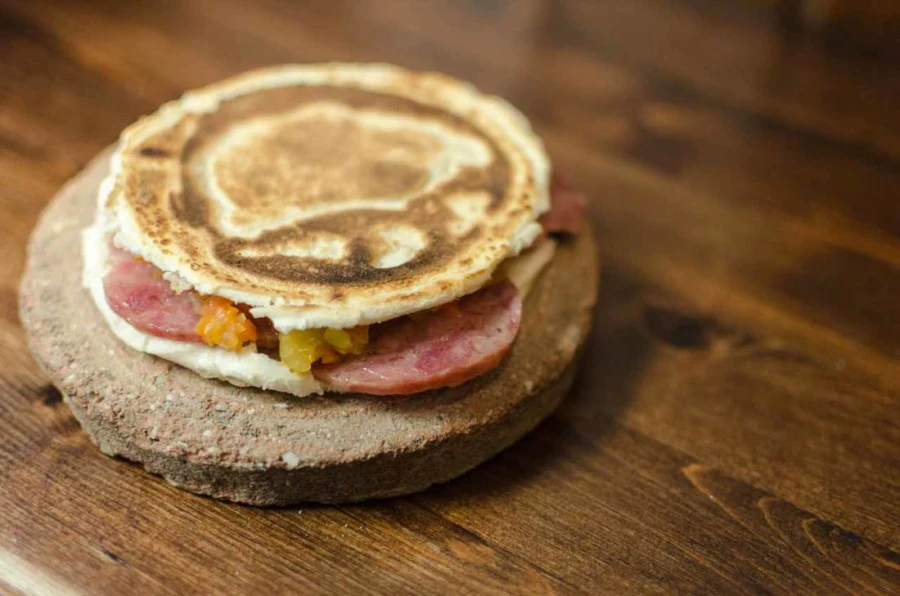
The first time you see them arrive at the table, they look almost too simple to matter.
Small, pale rounds of bread, stacked in a basket, still steaming.
Then someone opens one with their hands, spreads warm lard scented with garlic and rosemary, adds grated Parmigiano Reggiano, closes it — and suddenly the entire table goes quiet.
This is tigelle.
Not street food, not exactly bread, and not something you’ll casually find outside Modena and Bologna unless you know what to look for.
They’re cooked in a press, eaten hot, shared slowly, and filled with the flavors that define Emilia-Romagna more than any recipe ever could.
If you’ve seen the word tigelle on a menu and wondered what they actually are, how locals eat them, or where to try the real thing (not the tourist version), you’re in the right place.
At their core, tigelle belong to the Apennine hills between Modena and Bologna, where food was shaped less by recipes and more by necessity.
For centuries, families cooked simple dough between heated clay discs — tigelle, originally — using chestnut leaves to keep ash away from the bread. The bread itself was called crescentine.
Today, the name has flipped, the tools are cast iron instead of clay, and the ritual has moved from the fireplace to the table.
But the logic hasn’t changed: tigelle are made to be opened, filled, passed around, and eaten while they’re still hot enough to burn your fingers slightly.
That’s how you know they’re right.
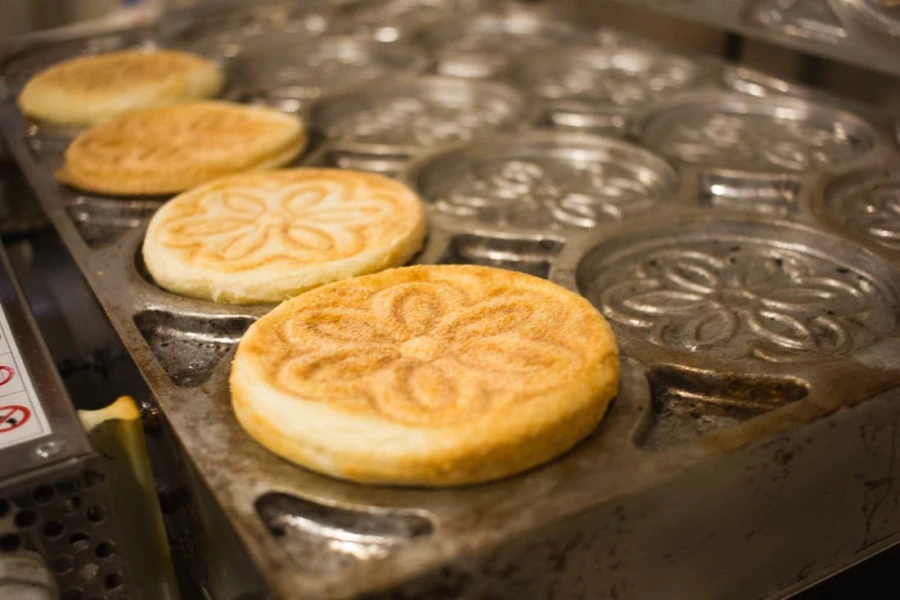
Today tigelle are cooked in a cast iron mould called tigelliera
Nowadays, cooking is done in a faster manner, placing the balls of dough between two plates of a metallic material, in machines specially prepared for this use.
At home, you can use aluminum molds containing from 4 to 7 tigelle. It can be affixed directly on heat, like a normal pan.
Obviously, the mould is called tigelliera, and you can find it in the best kitchen shops inside Bologna's food markets.
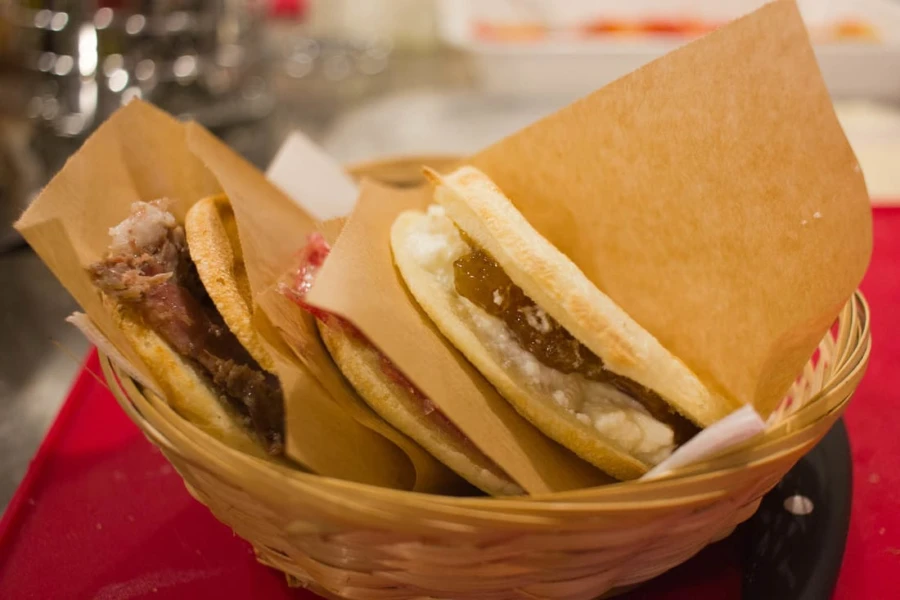
After cooking, tigelle are cut in half when they're still very hot and filled with various toppings.
The most traditional is pesto modenese: a mixed sauce made with chopped pork lard, rosemary, garlic, and a generous sprinkling of Parmigiano Reggiano.
In Modena, it's also known as cunza, the same seasoning used for borlenghi.
Over time, tigelle has been subject to less traditional but very tasty unions like cold cuts, cheese, jams, or chocolate creams for dessert.
Yield: 12–14 tigelle
(serves 4 as an appetizer or light meal)
Prep time: 20 minutes
Rest time: 1–1.5 hours
Cook time: 10–12 minutes
Total time: ~1 hour 45 minutes
Ingredients
- 500 g (4 cups) Italian “00” flour
- 260 ml (1 cup + 1 tbsp) lukewarm water
- 10 g (1¾ tsp) fine salt
- 30 g (2 tbsp) lard (traditional) or extra-virgin olive oil
- 5 g (1 tsp) instant yeast (optional – see note)
Method
- In a large bowl, mix the flour and salt.
- Add the water gradually and knead until the dough becomes smooth and elastic.
- Knead in the lard (or olive oil) until fully absorbed.
- Optional: if using yeast, dissolve it in a little lukewarm water and incorporate it into the dough.
- Cover and let rest at room temperature for 1–1.5 hours.
- Divide the dough into balls of about 60 g, then flatten into discs 10 cm (4 in) wide and 1 cm (½ in) thick.
- Let the discs rest for another 15–20 minutes.
- Cook in a preheated tigelliera or cast-iron press until lightly golden on both sides.
How to serve
- Split the tigelle while still hot and fill them with:
- pesto modenese (lard, garlic, rosemary, Parmigiano Reggiano)
- cured meats
- soft cheeses
- They also work well in a sweet version with jam or chocolate spreads.
Tradition note
- Historically, crescentine were made without yeast and cooked on heated clay discs in the fireplace. Today, many families and trattorie add a small amount of yeast or fat to achieve a softer, more consistent result. Both versions are considered authentic.
No time to cook?
Taste 3 versions on our Modena Food Tour in one of my favorite places.
Anyway, if you have time to travel in Modena and Bologna, here's a short list of great places.
Insolito Bar
The best tigelle and gnocco fritto (a fried bread typical of Modena and Emilia Romagna) I've ever had are prepared at this stall near Amendola Park.
Don't expect a restaurant, it's a place with plastic chairs and paper dishes, but the quality of meat, cheese, and tigelle is the best.
Viale dell'Autodromo, 35, 41126 Modena MO
Tel. 059 332835
Best for: casual lunch, authentic street food vibe.
L'Amaretto
A family business since 2004, this restaurant recently won the prize for the best tigella in Modena.
They like to change the shape of tigelle according to the season, so you can find a heart-shaped tigella for St.Valentine or a Christmas tree-shaped one in December.
Via Modenese, 543, 41057 Spilamberto MO
Tel. 059 785175
Best for: family dinner, seasonal variations, playful atmosphere.
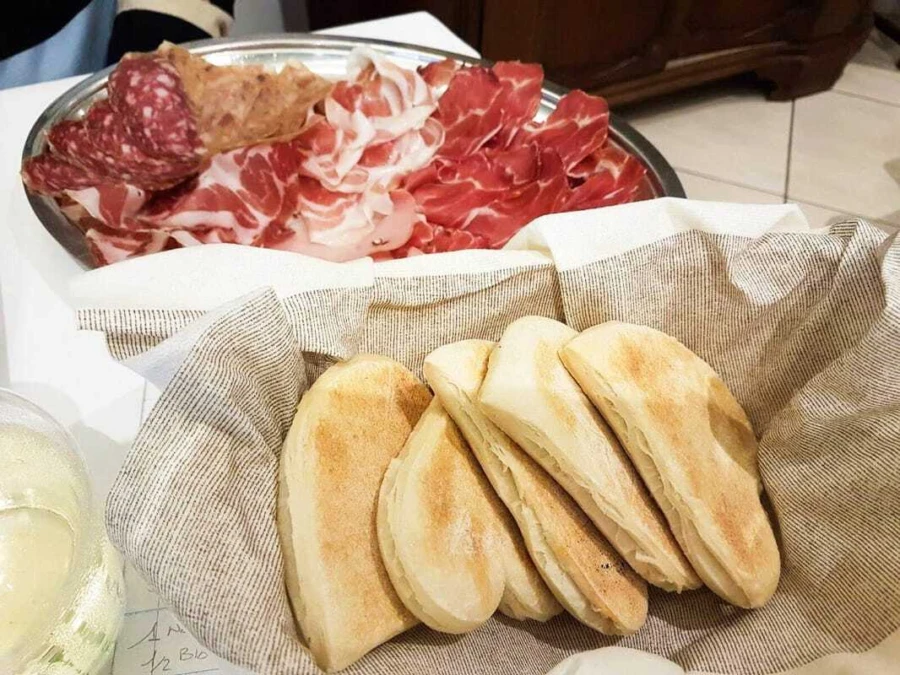
Trattoria di Via Serra
Never heard of Trattoria di Via Serra?
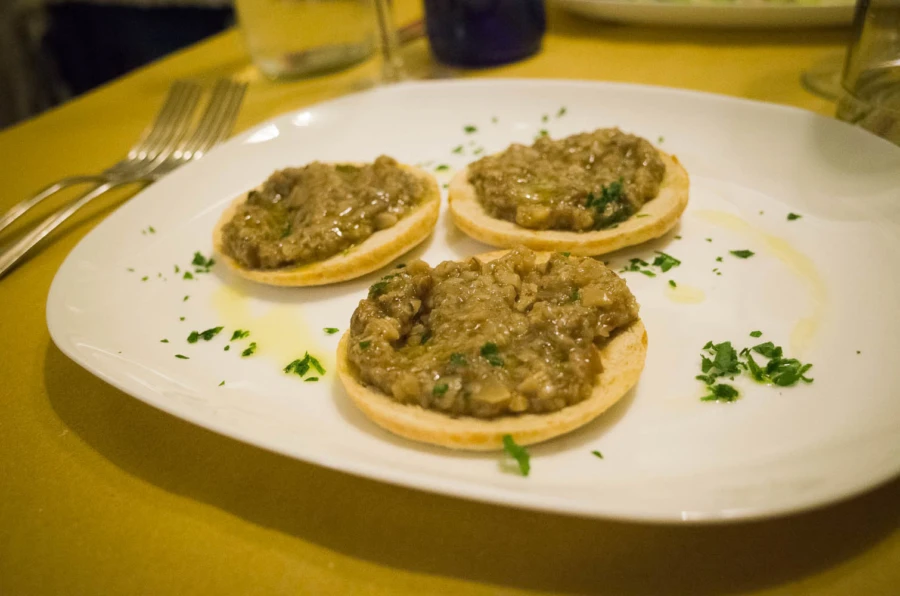
Maybe it's a bit late to find a table available, but in case it's your lucky day, this is THE place to have tigelle in Bologna. And if they have porcini mushrooms...jackpot!
Via Luigi Serra, 9/b, 40129 Bologna BO
Tel. 051 631 2330
Best for: dinner with friends, gourmet experience in Bologna.
Ready to eat tigelle in Modena?
Join our Modena Cooking Class with a local chef: roll up your sleeves to prepare tigelle, enjoy a real aperitivo with gnocco fritto and Lambrusco, and sit down for a family-style dinner in a super authentic spot in the heart of Modena.
Read our 700+ 5-star reviews on TripAdvisor – and see why food lovers from The Guardian, Phil Rosenthal, and Rick Stein all rave about us.
Only 8 spots available per class – book your seat now!
Related post
Tasty newsletter
Stay in touch with monthly news and get my PDF guide with the best restaurants in Bologna and beyond