Ravenna Mosaics: 8 must-see sites, history & how to visit
Ravenna is a city famous for its stunning mosaics, which date back to the early Christian and Byzantine periods. Eight of its monuments are UNESCO World Heritage Sites.
In this guide, we’ll skip the textbook tone and go straight to what matters: which mosaics to see, how to get your tickets and visit without crowds, and a few tasty stops along the way.
Comfortable shoes on, eyes up.
Let’s dive in.
Ravenna has a fascinating past.
In the 5th century, it became the capital of the Western Roman Empire.
Later, it was ruled by the Ostrogoths and the Byzantines.
These empires influenced the city’s art and architecture.
Between the 5th and 7th centuries, artisans created beautiful mosaics that survive today. They tell stories of faith, power, and history.
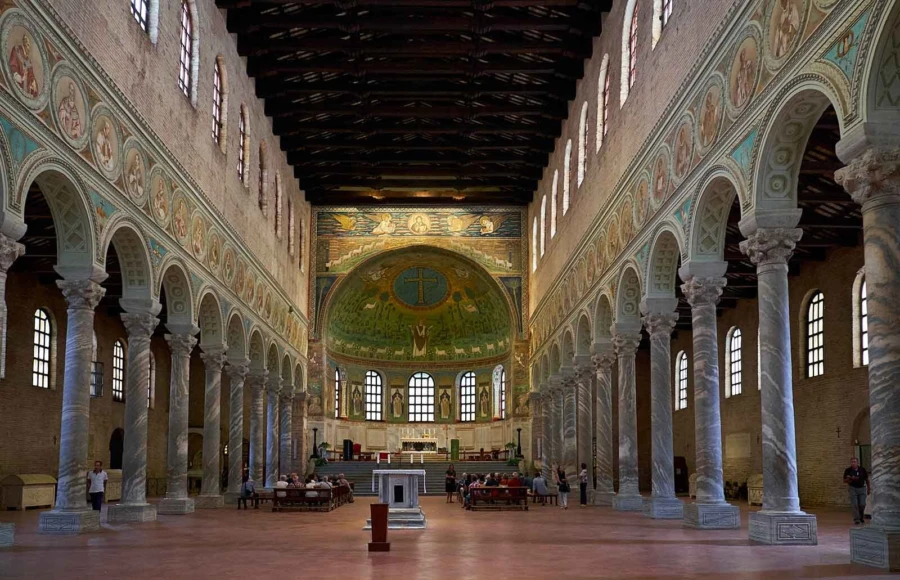
Ravenna is home to some of the world’s most famous mosaics.
Let’s explore the most important sites filled with art, history, and faith.
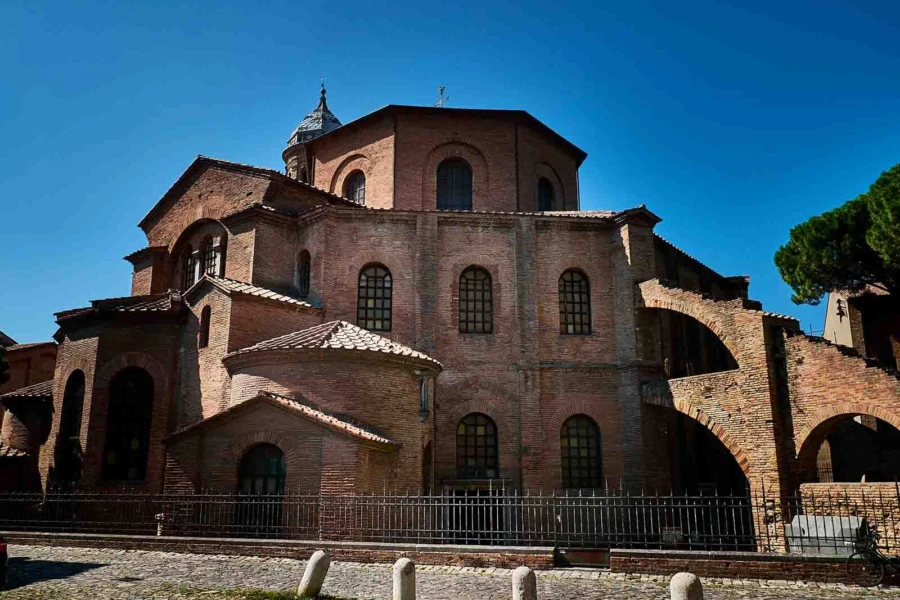
San Vitale is the big reveal. You walk in and — boom — Justinian and Theodora are staring right at you, regal and radiant.
Gold, green, and deep blues flood the walls like a silent choir.
Stand still for a minute in the center. That quiet echo is the best audio guide you’ll ever have.
Small outside, celestial inside.
The deep blue ceiling glows with stars that feel alive, as if they’re moving just for you.
The Good Shepherd mosaic — Christ surrounded by his sheep — is pure calm and care.
Only 20 people can enter at once, so you’ll have your moment of peace.
Honestly, it’s best that way: Galla Placidia is a place to whisper, not rush.
If you visit in high season, book in advance — or join a small Ravenna tour where entry tickets are already taken care of, so you can simply focus on the marvel.
A procession that never ends: martyrs on one wall, virgins on the other, all walking toward light.
It’s a 6th-century movie scene — long take, no cuts, pure rhythm in mosaic form.
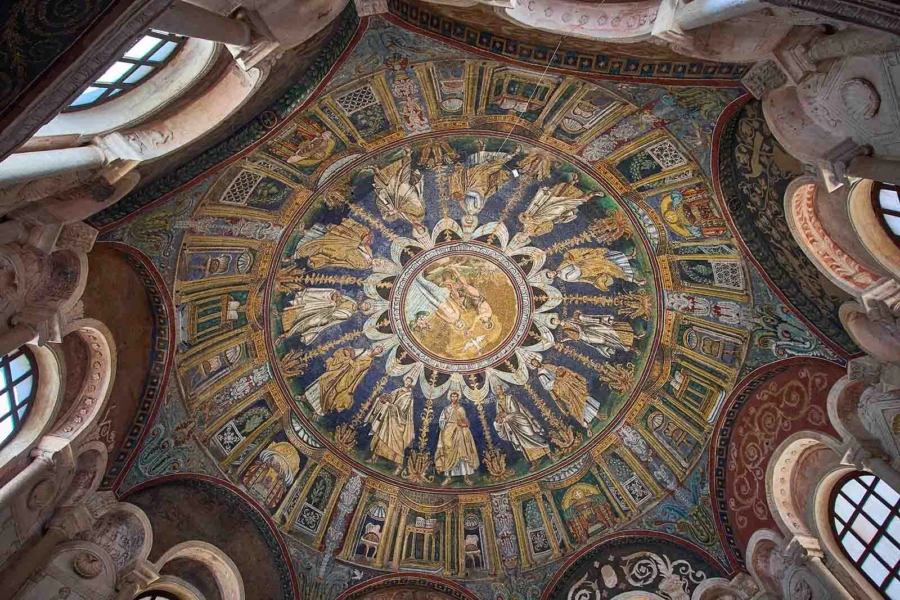
The Neonian Baptistery is one of Ravenna’s oldest monuments.
Its dome shows Christ's baptism in the River Jordan. He is surrounded by the apostles. The blue, gold, and white colors create a magical scene
Smaller, quieter, built for a different kind of Christianity.
The same story — Christ and the River Jordan — told with a new voice.
Compare the two: who wins for color and drama?
No gold here — just geometry and gravity. Built in 520 AD by King Theodoric, the huge stone dome looks like it was placed there by a giant who never came back for it.
It’s the minimalist side of Ravenna: solid, quiet, unforgettable.
Green meadows, stars, and a golden cross floating above them.
Saint Apollinaris stands calm among his flock — a peaceful pause after the city’s shimmer.
If Ravenna were a song, this would be the final note that lingers.
Once reserved for bishops, this tiny chapel mixes faith and battle.
Christ as a warrior takes the lead, conquering darkness in mosaic armor. It’s intimate, surprising, and unlike any other chapel in town.
Ravenna’s eight UNESCO sites deserve more than a quick checklist — slow down, look up, and let the light do the talking.
You can visit most of them with a combo ticket valid for several days, or join a Ravenna guided tour that includes entry tickets and helps you skip the waiting lines during busy hours.
To fully experience Ravenna’s mosaics:
- Start at San Vitale, then slip into Galla Placidia while your eyes are tuned to gold
- Visit the Neonian Baptistery, where Christ’s baptism glows in color.
- Stroll to Neonian Baptistery and Sant’Apollinare Nuovo — they’re just around the corner.
- Travel to Sant’Apollinare in Classe, where peace and faith shine in mosaic form.
Want to get hands-on?
Try a mosaic workshop and craft your own tiny masterpiece — your suitcase will thank you.
- Opening Hours: Times change by season. Verify details beforehand on the official Ravenna Mosaic website.
- Tickets: Get the combo ticket to visit multiple sites.
- Best Time to Visit: Spring and autumn have mild weather and fewer crowds. All mosaics are indoors, so traveling off-season means fewer people to enjoy the mosaics more easily.
Photo credits: Angel de los Rios @Creative Commons
Related post

Tasty newsletter
Stay in touch with monthly news and get my PDF guide with the best restaurants in Bologna and beyond