Parma in a day: what most visitors miss
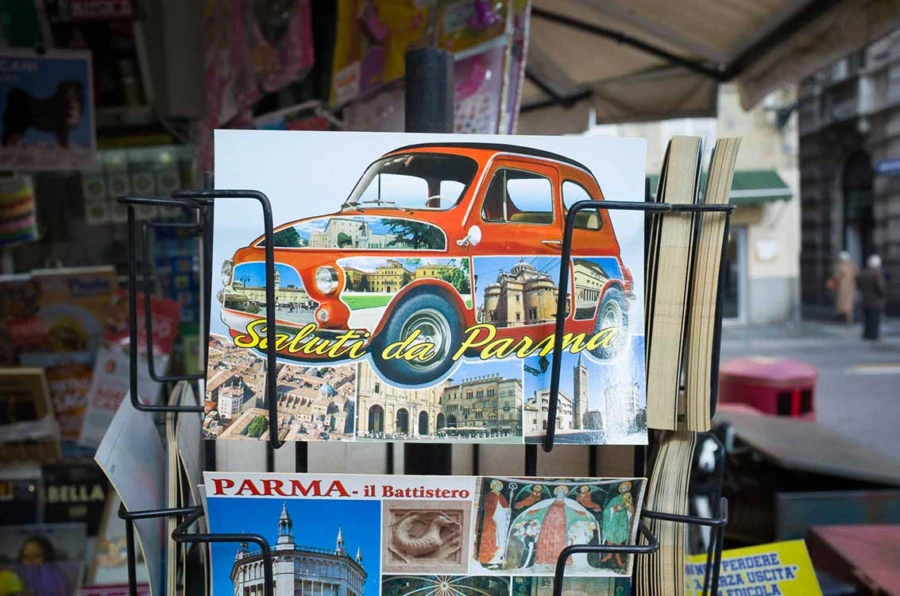
You already know Parma.
At least, your tongue does.
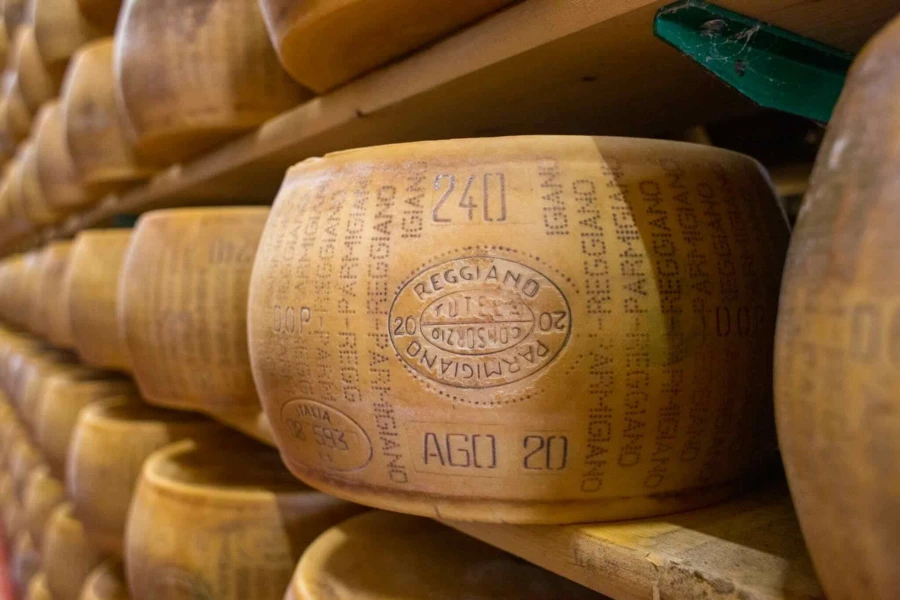
You’ve met it in a bite of Parmigiano Reggiano, in a slice of Parma ham, in the softness of culatello.
But the city behind those flavors?
Most people barely scratch the surface.
Parma is intimate. Walkable. Elegant in a quiet, almost shy way.
And packed with details tourists never notice because—let’s be honest—they follow the same three spots everyone else follows.
Let’s fix that.
Here’s how to see Parma in one day and actually understand it.
Not the “Tripadvisor Top 10” way.
The local way.
Short answer: yes. Long answer: definitely yes, especially if you love food, art and compact, walkable cities.
Parma is in the heart of Emilia-Romagna, between Milan and Bologna.
It’s compact enough to explore on foot in one day, but rich enough to keep you busy for a whole weekend.
In the same morning, you can:
-
admire Renaissance frescoes in the Duomo
-
step inside a spectacular wooden Baroque theatre
-
walk in a quiet park
-
end with a plate of fresh tortelli and a glass of Lambrusco
Let’s see what to do in Parma in one day.
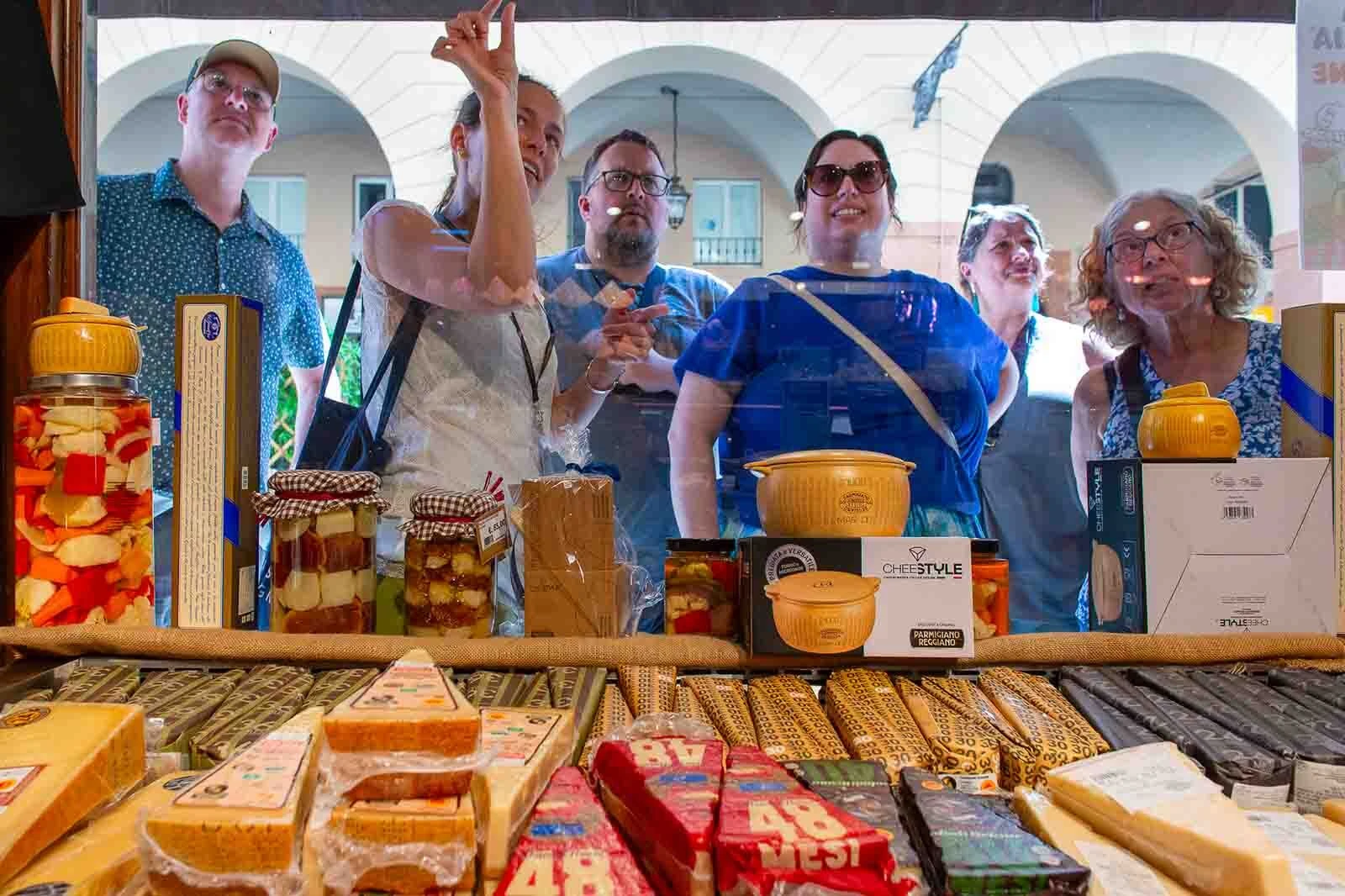
Start from Piazza Duomo and then move towards the river and Oltretorrente.
You can easily walk between all these stops.
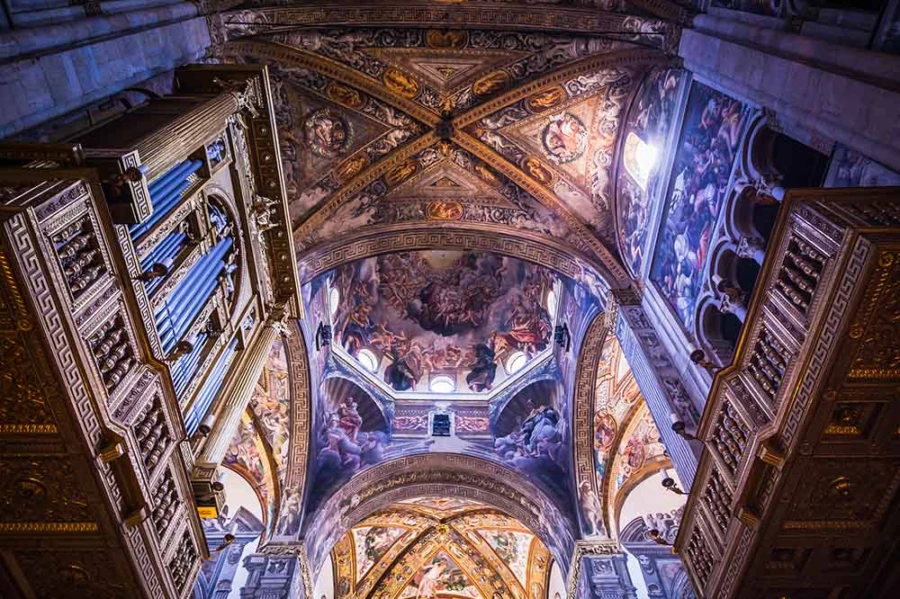
Parma's Duomo
Piazza Duomo looks quiet.
Almost too quiet for what it’s hiding.
Step into Parma Cathedral (Cattedrale di Santa Maria Assunta), one of the best examples of Romanesque architecture in Italy.
In 1522 Correggio was asked to paint the dome, and he imagined a spiral of angels rising into light—a kind of Renaissance whirlpool that still feels strangely modern.
Locals took one look and said it resembled a giant brodo di rane—a frog-leg broth spinning in a pot.
Food always wins here.
Today, the same fresco is considered one of the greatest works of its time.
Funny how tastes change.
Next door stands the Baptistery, soft pink and octagonal.
Inside, light behaves like a living thing.
It warms the stone, moves across the carvings, and turns silence into something tangible.
Most visitors rush through it.
Don’t.
Give this place five quiet minutes of your day.
Practical note: the Cathedral is free, but the Baptistery requires a ticket.
Both close during liturgical celebrations and on Christmas Day.
- Tip: visit in the morning for softer light and fewer people
- More info: piazzaduomoparma.com
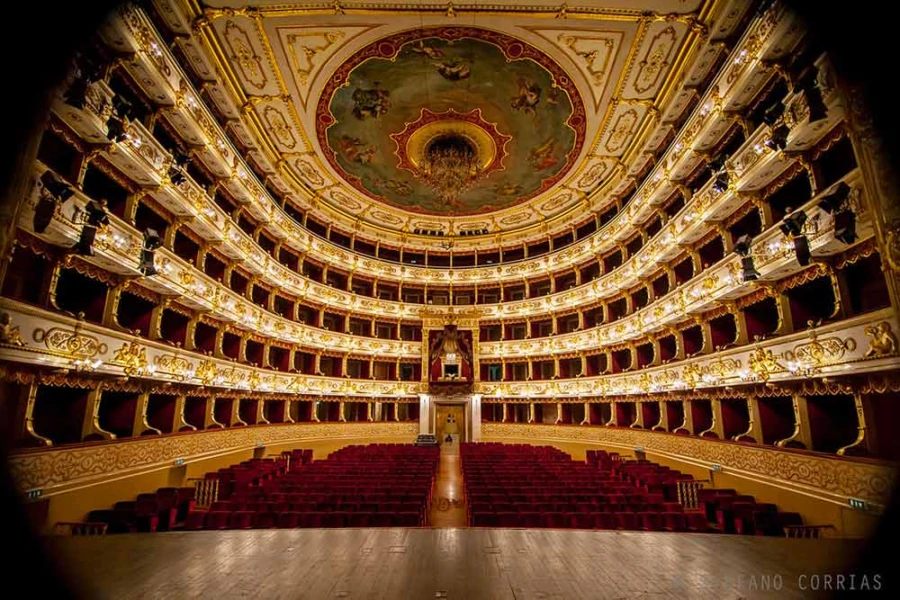
Regio Theatre in Parma
Opera.
You might think you don’t need it.
Then you step inside Teatro Regio and realise you were wrong.
Built in the 19th century, it remains the beating heart of Parma.
Its red velvet, gold details and perfect acoustics turn even a rehearsal into something emotional.
If Verdi touches you here, you won’t forget it.
October brings Festival Verdi, when the whole city seems to hum with music. Even bar conversations get dramatic.
Why this obsession with Verdi?
He grew up nearby, brilliant and famously grumpy.
They say he never travelled without a piece of culatello, tucked next to his sheet music—proof that even geniuses need comfort food.
- Tip: Teatro Regio can be visited all year with guided tours, backstage included.
- More info: www.teatroregioparma.it
If you’re already in the mood after Teatro Regio, walk a few minutes and step into the Casa della Musica.
Most visitors don’t even know it exists, which is strange because Parma breathes music the way other cities breathe traffic fumes.
It’s a small, modern space built inside a former hospice.
Quiet halls, clean lines, and rooms where the history of Parma’s sound world unfolds in a way that feels… intimate.
Not dusty, not academic. Just human.
You’ll find early instruments, listening rooms, archival recordings, and little details that reveal how deeply music is woven into the city’s identity.
It’s the kind of place that makes you stop.
You look at an old score and suddenly imagine the hands that turned its pages a century ago.
Fifteen, twenty minutes.
That’s all you need.
But it adds a new layer to the Parma you think you’re seeing.
- Tip: go early in the afternoon. It’s usually empty, and the listening rooms feel like they’re yours alone.
- More info: lacasadellamusica.it
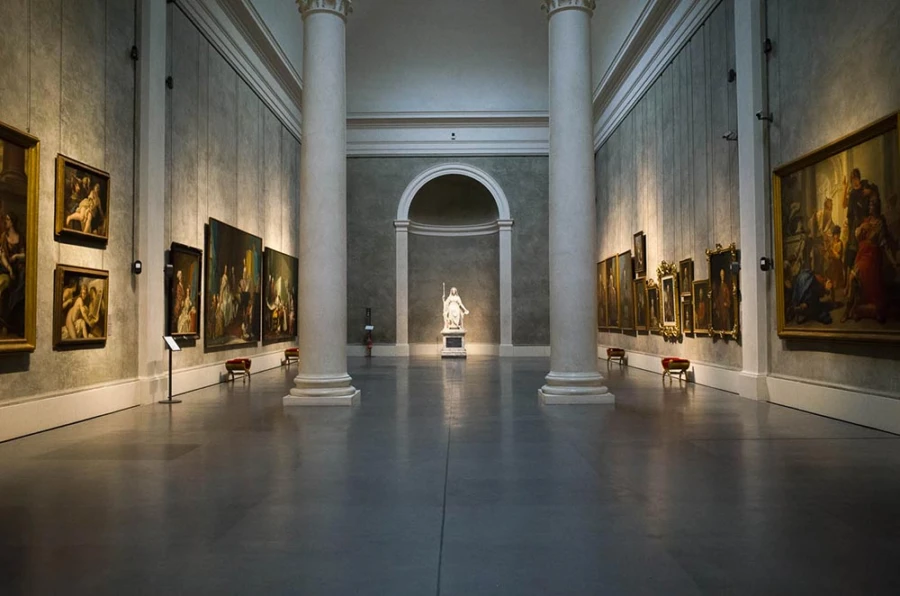
The main hall of Pilotta Museum
Walk toward the river and suddenly the city expands.
Stone, arches, corridors, shadows.
This is Palazzo della Pilotta, a complex that has changed identity more times than a touring opera singer.
Inside you’ll find the National Gallery, the Palatine Library, the Archaeological Museum—and tucked inside them all, the astonishing Teatro Farnese.
The palace takes its name from pelota, a Spanish game once played here.
Strange detail, but Parma is made of these small oddities.
Don’t miss La Scapigliata, a Leonardo da Vinci portrait so soft and unfinished that it looks like it’s still thinking about what it wants to become.
Then step into Teatro Farnese.
Imagine a wooden cathedral folded inside a palace.
Now imagine you’re standing on its stage, surrounded by silence thick enough to touch.
That’s the feeling.
Inside the complex, you’ll also find the Museo Bodoniano, a quiet gem dedicated to Giambattista Bodoni, the printer who made Parma famous across Europe.
It’s small, calm, and filled with the punches, books and typefaces that shaped modern typography.
A short stop, but a worthwhile one. Especially if you love paper, design, or the smell of old books.
- Tip: don’t rush this section. Two hours here feel like a gift.
- More info: complessopilotta.it
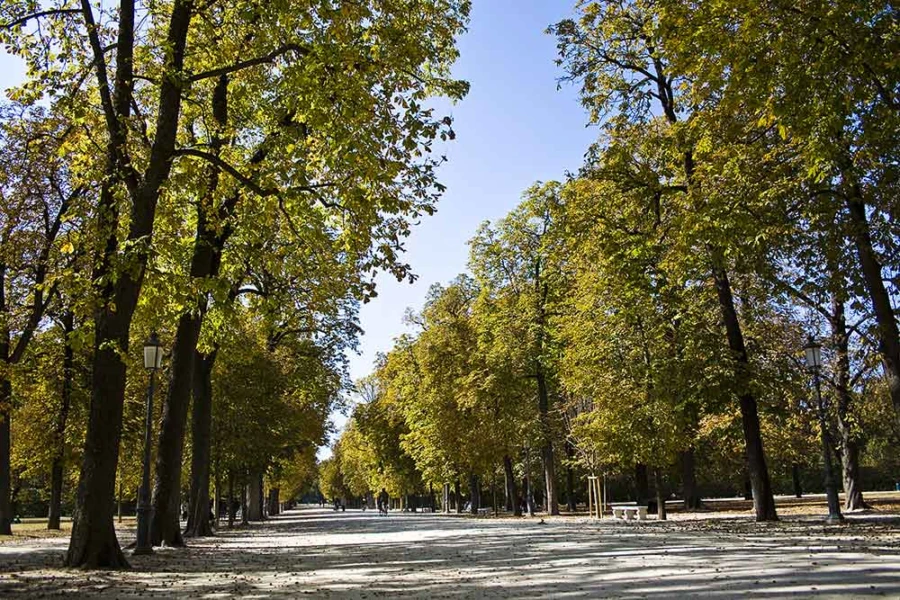
Parco Ducale in Oltretorrente
Cross Ponte di Mezzo and everything changes.
The tidy centre becomes lively, lived-in, a little worn, a little rebellious.
This is Oltretorrente.
Laundry on balconies.
Kids on bikes.
Shops that refuse to disappear.
It’s the neighbourhood where Parma stops performing. And finally breathes.
Keep walking into Parco Ducale, a long stretch of trees, gravel paths and gentle shade.
Sit under a massive plane tree, open some focaccia, and watch the city slow down around you.
A perfect afternoon pause.
Tip: cross the river after lunch. Oltretorrente wakes up slowly, and Parco Ducale is at its best when the afternoon light cuts through the trees.
If you want a glimpse of Parma’s real life, slip into Via Nazario Sauro.
It’s a quiet street, nothing flashy, but full of tiny places that pull you in.
Bookshops with crooked shelves and owners who know every spine by heart.
Vintage corners where jackets smell of old stories.
Record stores with crates of vinyl you promise yourself you won’t browse, and then you do.
It’s the kind of street that slows you down without asking.
A small detour that makes the whole day feel more personal.
Tip: go around 5 pm, when everything (and everyone) softens.
Here’s the whole itinerary on a map, so you can see how close everything really is and plan your one day in Parma without stress.
Here’s the truth: you can eat well almost anywhere in Parma.
But if you want the place locals actually return to, start with these three.
Osteria Virgilio
Traditional dishes without the usual heaviness.
Tortelli that taste like someone’s grandmother is still in the kitchen.
Simple, warm, right.
Gatta Matta
Colourful, playful, modern.
A little creative, never pretentious.
Perfect if you want a break from the classics without leaving Parma behind.
Tabarro
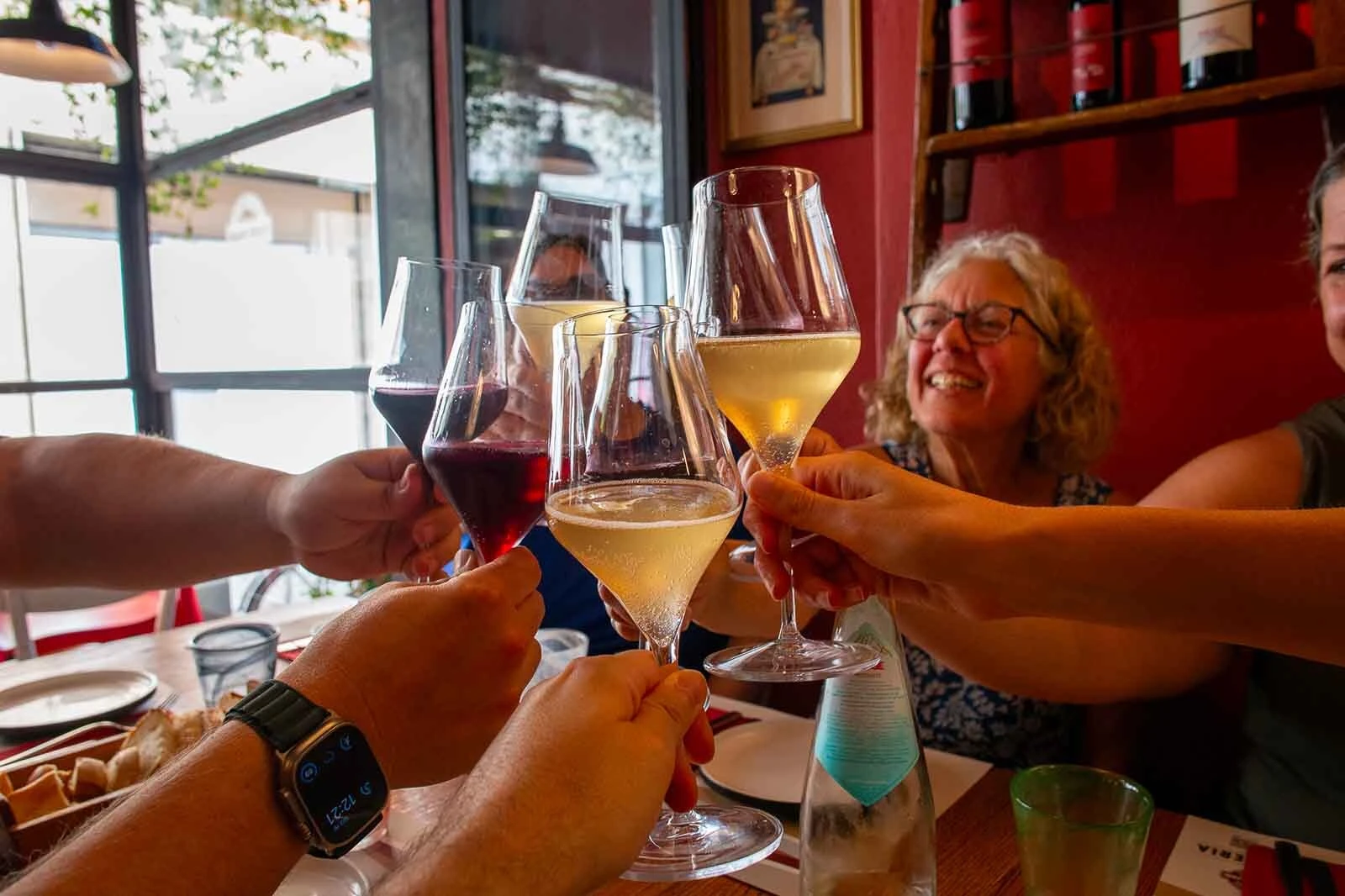
A wine bar, a salumeria, a temple of Lambrusco and cured meats.
Stand, sit, lean—whatever you do, order more salumi than you think you need.
Want more ideas?
I made a full list of Parma best restaurants.
Torrechiara
A fairytale castle on a hill.
Golden room included.
Busseto & the Verdi countryside
Fog, fields and slow roads.
You understand Verdi better here.
Langhirano
Prosciutto di Parma territory.
Visit a prosciuttificio and breathe in the cellars.
It’s a smell that sticks to memory more than clothes.
Fontanellato
A castle surrounded by water.
Peaceful, timeless, perfect for a half-day wander.
Train: the easiest way to arrive.
On foot: everything worth seeing is walkable.
Car: helpful outside the centre, dangerous inside the ZTL.
Bike: fun, but not essential.
Spring: the city stretches its arms. Ideal.
Autumn: colours, festivals, misty mornings. Magical.
Summer: hot in the afternoon, beautiful at night.
Winter: quiet streets, warm broth, perfect museums.
1 day in Parma is enough to see the main highlights: Duomo, Baptistery, Pilotta, Oltretorrente and a proper lunch or dinner
-
2 days in Parma let you slow down, visit more museums, enjoy a food experience and maybe add a day trip in the countryside
If you’re staying in Bologna or Milan, Parma also works very well as a day trip by train.
Parma isn’t loud.
It doesn’t chase you, and maybe that’s why most visitors leave having seen only half of it.
But if you slow down—just a little—you notice the details: a dome that swirls, a theatre built like a ship, a street that smells of books and vinyl.
One day is enough to start understanding the city.
Not to finish it.
Parma rewards the curious.
And if you’re one of them, you’ll already be planning your next visit before you leave the station.
[photos: Stefano Corrias, Adrian Scottow, Atsje Bosma-Prins]
Related post
Tasty newsletter
Stay in touch with monthly news and get my PDF guide with the best restaurants in Bologna and beyond