Parma Italy food: 11 must-try dishes and where to eat them
Parma takes food seriously, almost too seriously.
Recipes here get defended, argued over, passed down exactly as they were. That stubbornness is the whole point.
You feel it at the table.
A dish that's stayed the same for three generations tastes like something with weight behind it, not just a good meal.
This guide covers what to eat in Parma, why locals still argue about how each dish should be made, and where to find kitchens that haven't cut corners.
Parma sits in the heart of Italy’s Food Valley.
It’s the birthplace of Prosciutto di Parma and Parmigiano Reggiano, but the real depth of the local cuisine goes far beyond these two icons.
Here you’ll find a strong culture of stuffed pasta, cured meats, long aging processes and dishes that rely on very few ingredients, executed perfectly.
If you want to eat well in Parma, knowing what to order is just as important as knowing where.
Here you will find 11 dishes and 11 restaurants to have them.
Looking for more great places to eat?
Here’s my curated guide of the best restaurants in Parma. I'm always happy to update it.
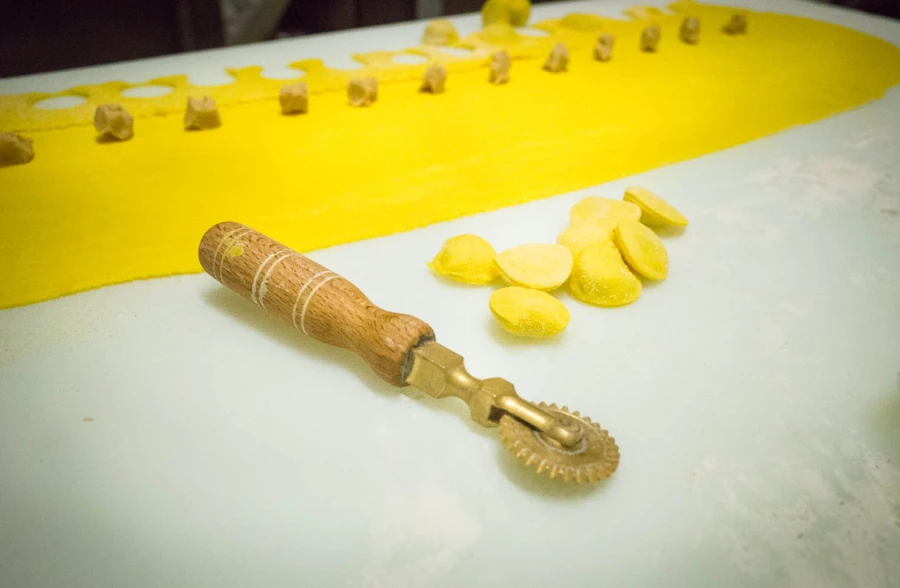
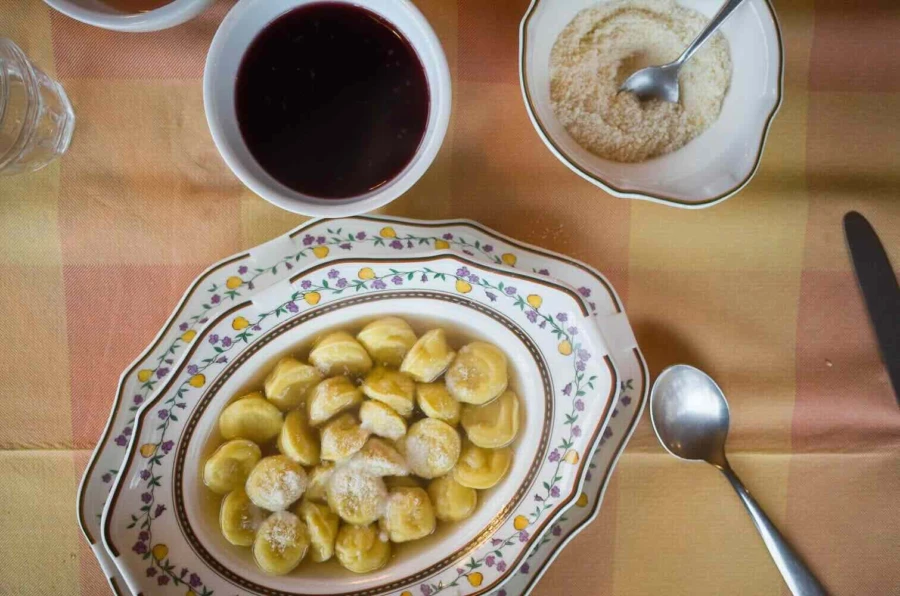
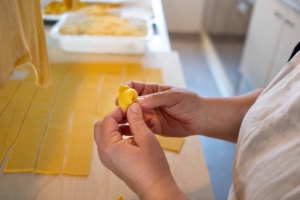
Anolini are small, round stuffed pasta, always served in broth.
The filling is made from slow-cooked beef, pork, breadcrumbs, eggs, Parmigiano Reggiano and nutmeg. No ricotta. No shortcuts.
The name anolini most likely comes from anello, ring, referring to their original round shape.
They are the most festive pasta in Parma, traditionally prepared for holidays and special occasions.
The broth matters as much as the pasta.
Clear, deep, long-cooked.
And according to local tradition, a few drops of Lambrusco can be added directly into the bowl, right before serving, to give the broth an extra layer of aroma.
Where to eat it:
Osteria Virgilio – A resistant osteria in the Oltretorrente area, one of the most authentic parts of Parma. Here anolini are served in a cup, as tradition dictates, with a rich broth that stays light on the palate.
Via Emilia Ovest 87, Parma
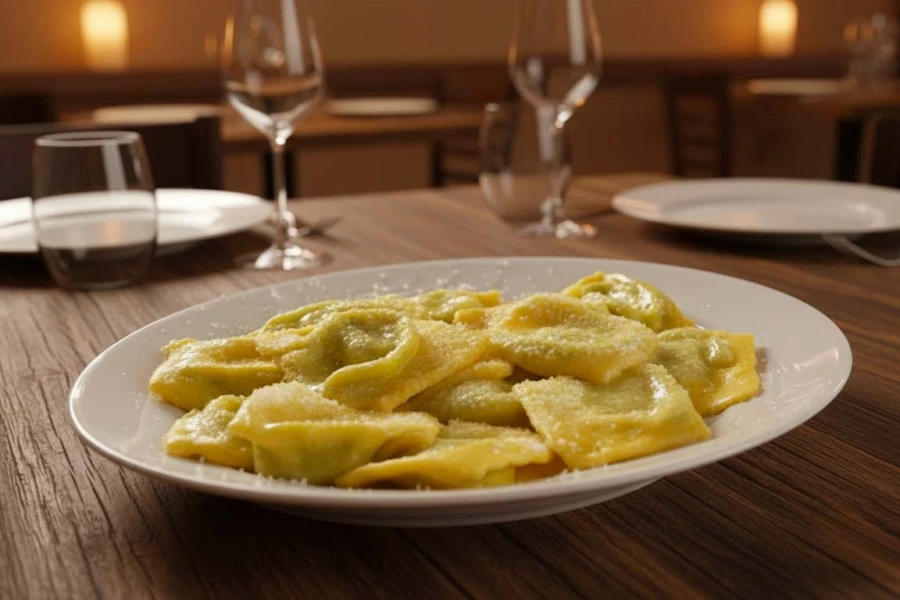
Tortelli d’erbetta are the backbone of Parma’s first courses.
They are filled with ricotta, Swiss chard or spinach, eggs and Parmigiano Reggiano, then dressed simply with butter and more Parmigiano cheese.
There is nowhere to hide here.
If the filling is wrong, you taste it immediately.
If the pasta is too thick, you feel it at the first bite.
Where to eat it:
Trattoria Ai Due Platani – Located just outside the city center, this historic trattoria was founded in the 1920s and is one of the most respected names in Parmigiano cuisine.
Beyond tortelli, it is also famous for its gelato allo zabaione, still churned using a Carpigiani machine from 1964. Save room for it.
Strada Budellungo 104/a, Coloreto (Parma)
aidueplatani.com
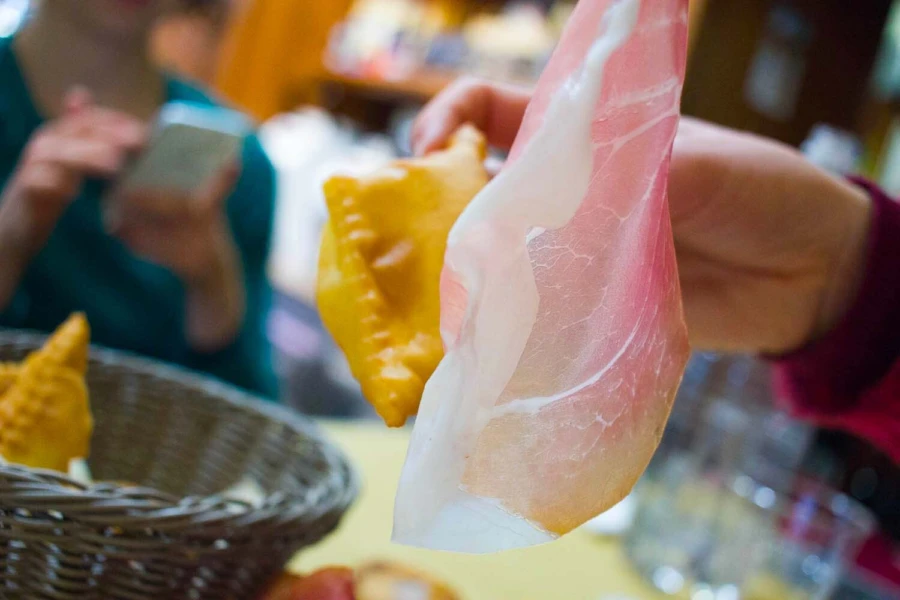
Culatello is often described as the cousin of Prosciutto di Parma, but that comparison only goes so far.
Culatello is made from a single muscle of the pig’s hind leg and is produced by a very limited number of producers in a small area along the Po River.
It needs fog, humidity and time.
A lot of time.
This is why culatello is rarer, more delicate, and significantly more expensive than prosciutto.
When sliced properly, it is sweet, aromatic and almost creamy.
This is why culatello is a cornerstone of our Parma Food Tour.
It sets the bar.
Once you taste it at the source, there is no going back to “normal” cured meats.
Where to eat it:
Antica Corte Pallavicina – Led by master Massimo Spigaroli, this is one of the reference points for culatello. The estate sits close to the Po river and includes historic aging cellars, a restaurant and also a relais where you can stay overnight.
Strada Palazzo due Torri, 3, Polesine Parmense (Parma)
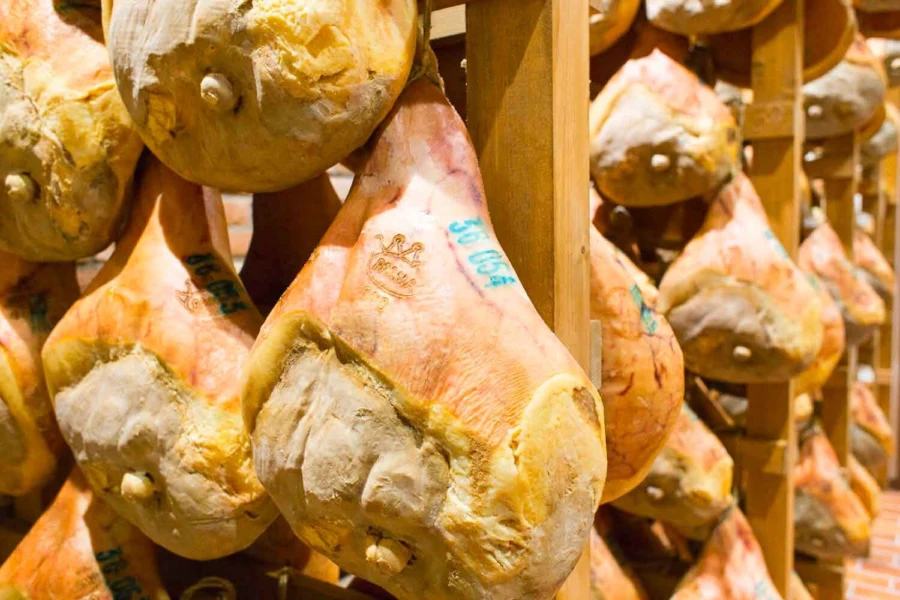
Prosciutto di Parma needs no introduction, but tasting it in Parma is a different experience.
It’s sweeter, more balanced and incredibly delicate.
The secret lies in the natural aging process and the unique microclimate of the hills south of the city.
No additives. Just salt, air and time.
Where to eat it:
Degusteria Romani – A reference point for local cured meats, with a strong focus on Prosciutto di Parma and other territorial specialties.
Borgo Palmia, 2/C, 43122 Parma
silvanoromaniparma.it/degusteria-romani/
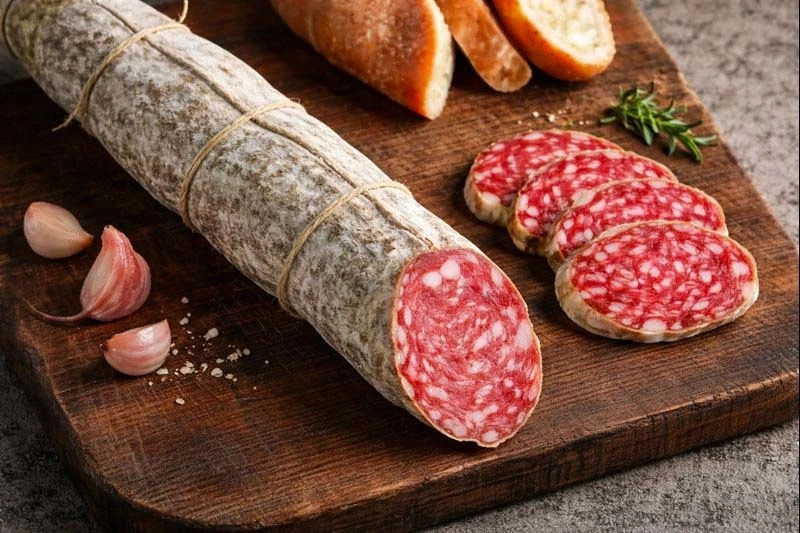
Salame Felino comes from the hills south of Parma and is one of the most representative cured meats of the area.
It is made with carefully selected pork, seasoned lightly and left to age slowly and naturally.
To taste it at its best, this salami should be cut diagonally, in slices about half a centimeter thick.
This cut enhances its compact texture and allows the delicate flavor to unfold gradually, highlighting the perfect balance between lean meat and fat.
The seasoning is never aggressive.
Time does the work.
Where to eat it:
Tàbarro – An enoteca just steps from the main square.
While they may not always have Salame Felino specifically, their attention to cured meats is meticulous.
They work with very small artisanal producers and offer a carefully curated wine selection. This is a place to discover products you won’t easily find elsewhere.
Strada Farini 5/b, Parma
www.tabarro.net
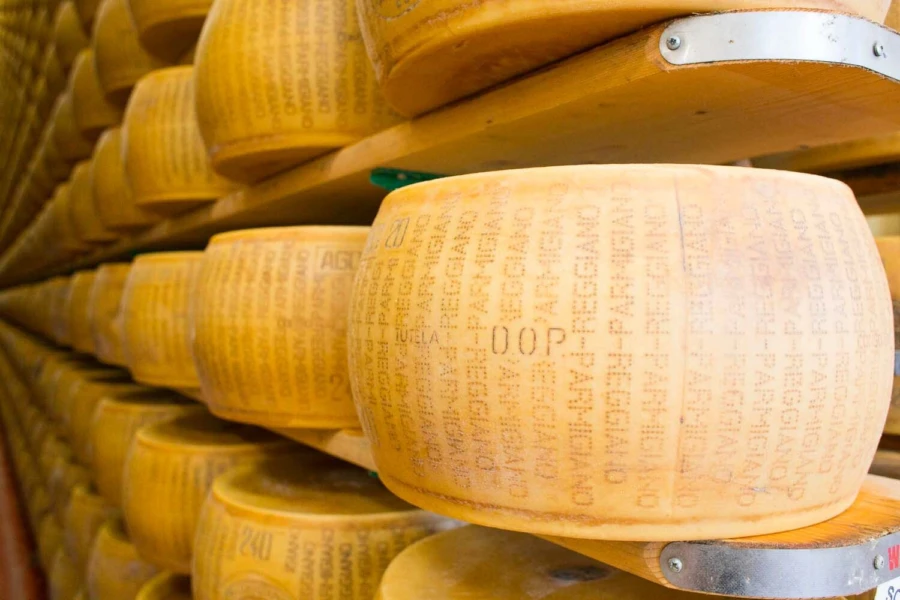
Most people focus only on aging.
24 months.
36 months.
48 months.
Even 60.
But Parmigiano Reggiano is also about origin.
Mountain cheese tastes different from plain cheese.
And Parmigiano made with milk from Vacche Rosse (Red Cows) is something else entirely.
These cows are rarer, and their milk produces a cheese that is deeper, sweeter and unforgettable.
Where to eat it:
Caseificio Ugolotti – A local dairy where you can taste Parmigiano Reggiano of different ages and origins, directly at the source.
Via Marco Emilio Lepido, 72, 43122 Parma
caseificiougolotti.com
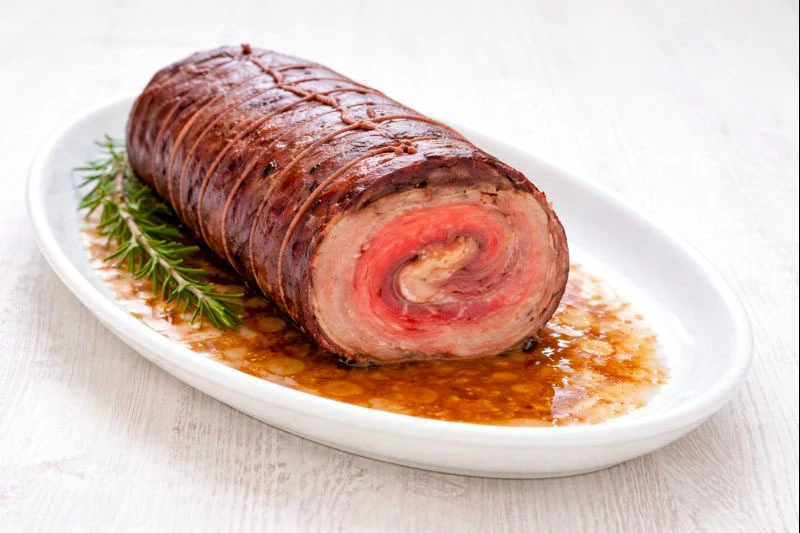
Despite the name, this is not a perfume.
Even if it sounds like one.
Rosa di Parma is a classic main course made with beef fillet stuffed with Prosciutto di Parma and Parmigiano Reggiano, then slowly cooked with wine. The result is rich but precise, with flavors that stay clear and balanced.
It’s one of those dishes that shows how Parma cuisine can be elegant without being complicated.
Where to eat it:
Osteria dei Servi – Located in Piazza della Ghiaia, the square that hosts Parma’s historic market. The atmosphere is lively and convivial, and the menu focuses on traditional dishes prepared in a straightforward, respectful way.
Piazza della Ghiaia 1M, Parma
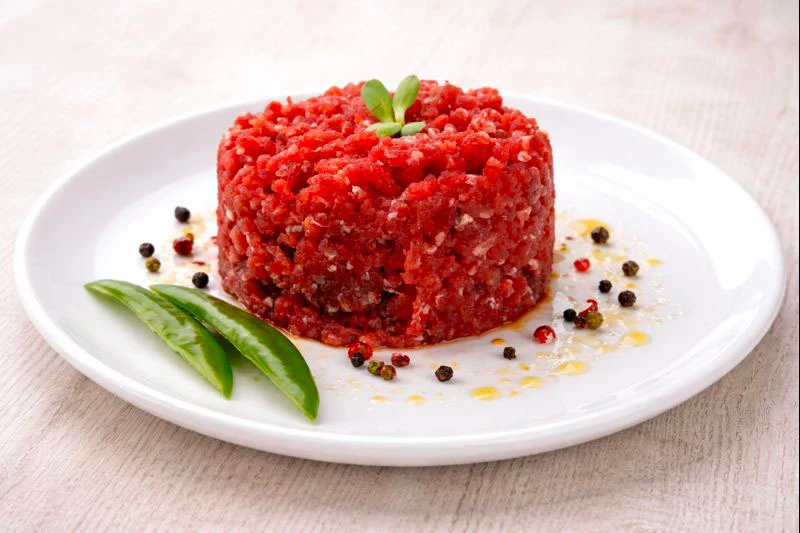
For many visitors, horse meat may sound unusual.
In Parma, it’s part of a long-standing tradition.
It’s a lean meat, rich in iron and low in fat, which is why it was historically considered suitable even for children.
Once a poor man’s food, today it is treated with great care and respect.
Parma is widely considered one of the cradles of horse meat cuisine in Italy.
Where to eat it:
Trattoria Corrieri – Historic restaurant in the city center, offering traditional Parmigiano dishes, including horse meat preparations.
Strada Conservatorio 1, Parma
trattoriacorrieri.it
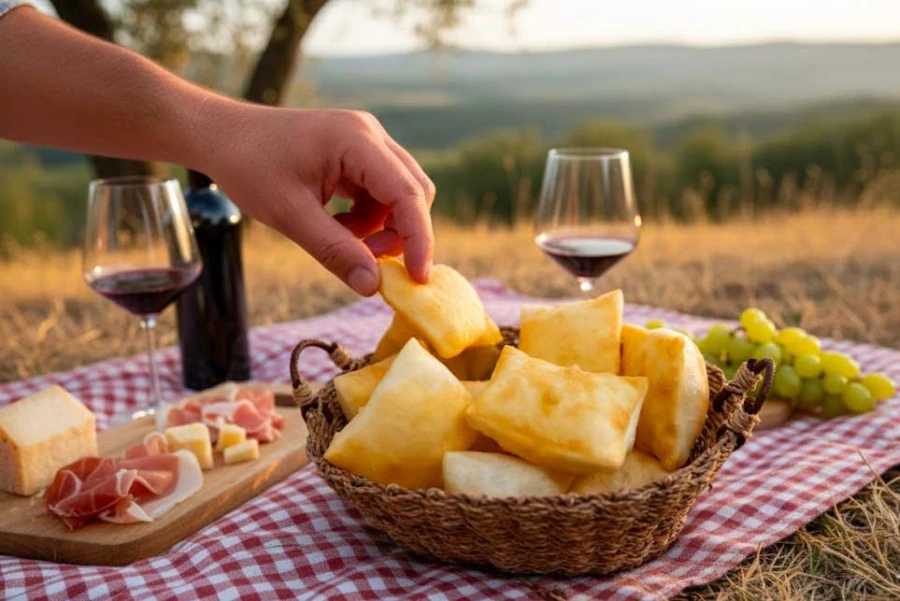
If you travel across Emilia-Romagna, you’ll find this dish under many different names.
Crescentine, gnocco fritto, pizza fritta, ficattola.
In Parma, there’s no debate.
It’s called torta fritta. And yes, it’s always fried.
The dough is simple, but the result is anything but.
Light, airy, golden on the outside and hollow inside, torta fritta is made to be opened and filled with cured meats.
Prosciutto di Parma, Salame Felino, culatello. This is where it truly shines.
As for cholesterol?
We’ll think about that tomorrow.
Where to eat it:
Osteria dello Zingaro – Known for traditional salumi platters paired with freshly made torta fritta, served the way locals expect it.
Borgo del Correggio 5B, Parma
osteriadellozingaro.com
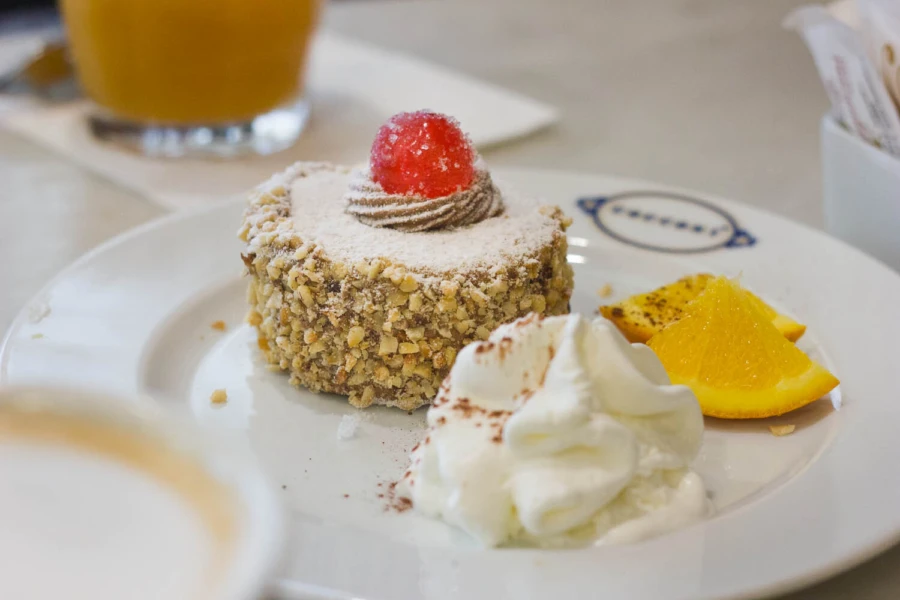
Torta Duchessa is one of Parma’s historic desserts, named after Maria Luigia, Duchess of Parma and wife of Napoleon.
Her influence on the city’s culture and cuisine is still visible today.
The cake is rich, layered with chocolate, custard and almond notes.
You’ll spot it easily while walking through the historic center, displayed in the windows of the city’s most respected pastry shops.
Decadent, but always balanced.
Where to eat it:
Antica Pasticceria Pagani – A traditional pastry shop where classic Parmigiano desserts are prepared with respect for their original structure and balance.
Borgo Venti Marzo, 4, Parma
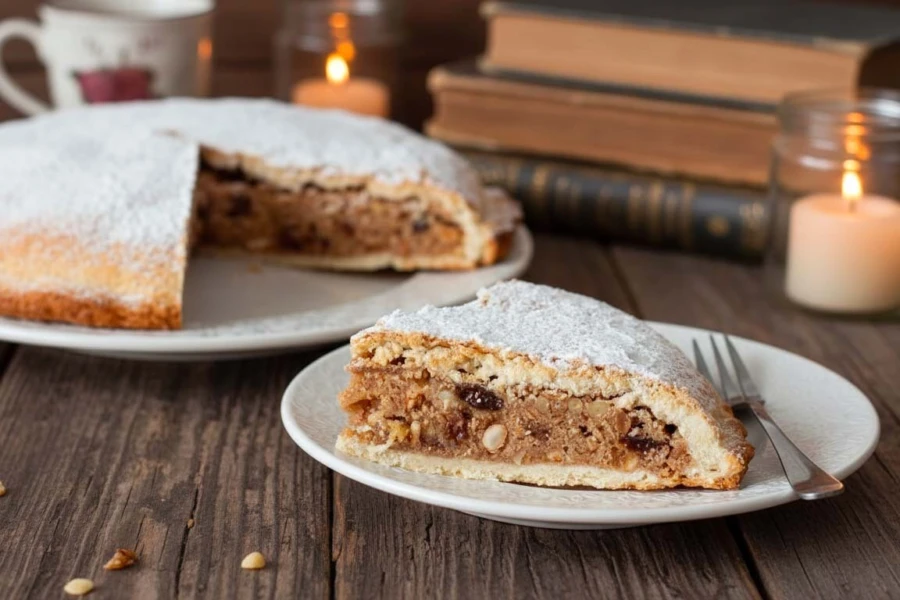
Spongata is one of the most ancient desserts of Emilia, with origins that date back to medieval times.
Refined over the centuries in convent kitchens, it later became a typical Christmas dessert enjoyed even by noble courts.
The name comes from the archaic word sponga, referring to the slightly textured surface of the cake once baked and dusted with powdered sugar.
Inside, the filling is rich and aromatic: honey, dried and candied fruit, jam or sweet mustard, breadcrumbs and spices, enclosed between two very thin layers of dough.
Where to eat it:
Pasticceria Provinciali – Founded in 1902, this historic pastry shop is a reference point in Parma for traditional desserts. In addition to spongata, it is also known for the Torta Verdiana, created in honor of Giuseppe Verdi.
Via Carmignani 14/b
Parma is not a place you visit just to eat.
It’s a place you visit to understand food.
Once you’ve tasted anolini in brodo, real culatello, properly aged Parmigiano Reggiano and torta fritta paired with the right salumi, your idea of Italian food naturally shifts.
This is not about trying everything.
It’s about tasting the right things, in the right place, at the right moment.
And that’s exactly what Parma does best.
Related post
Tasty newsletter
Stay in touch with monthly news and get my PDF guide with the best restaurants in Bologna and beyond