Bologna’s Best Bakeries: Where the Locals Eat (2026)
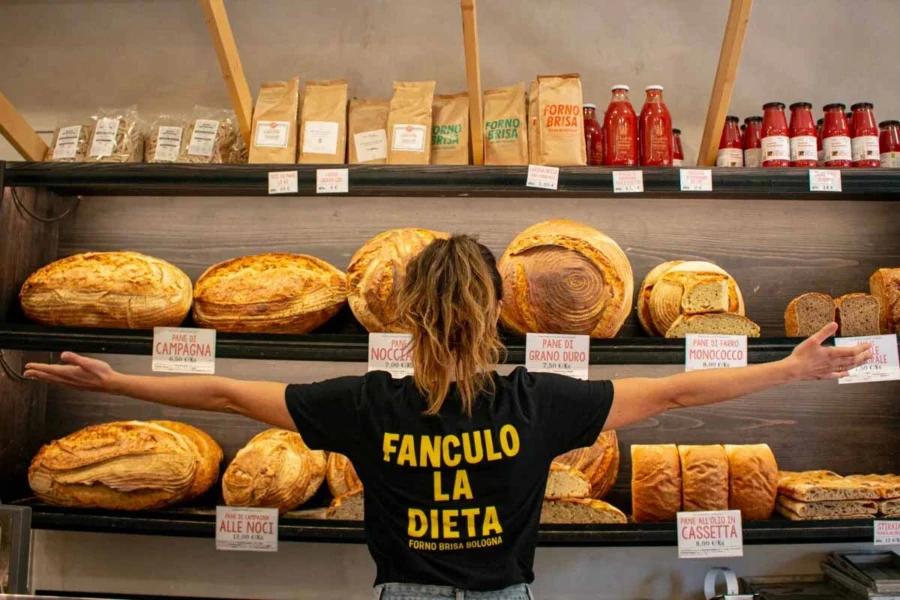
Looking for the best bakery in Bologna?
Whether you’re searching for crusty traditional bread, long-fermented sourdough, flaky croissants or a historic pastry shop near Piazza Maggiore, this guide will help you find the right spot.
Here is a curated list of the best bakeries in Bologna, loved by locals and perfect for travelers who want more than just “any bakery in Bologna” — but the right one for what they’re craving.
The "Quadrilatero" is Bologna’s medieval market, a maze of narrow streets where the scent of cured meats and aged cheese is thick in the air.
But if you know where to look, a couple of fantastic bakeries will appear.
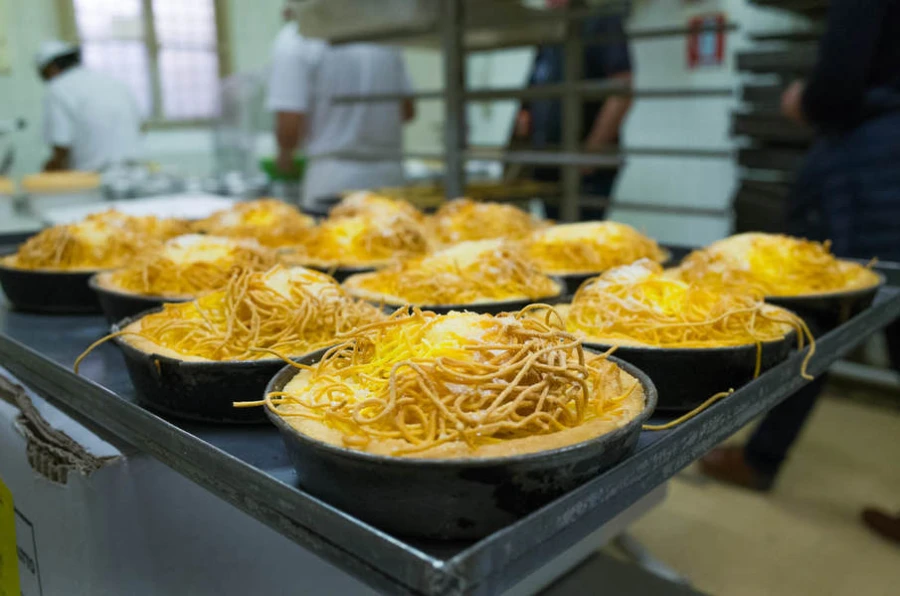
Torta di tagliatelle at Panificio Atti
Walking into Panificio Atti feels like stepping into a 19th-century oil painting, only it smells much better.
Since 1868, the Atti family has been the keeper of the city’s most sacred salty snack: the Crescenta. Forget the lean, airy focaccias you see elsewhere; our Crescenta is a rich, golden slab of dough studded with cubes of prosciutto or ciccioli.
It’s heavy, oily in the best way possible, and a local rite of passage.
But Atti isn't just about the salt. Look for the Torta di Riso (Rice Cake), also known as the Torta degli Addobbi. This creamy, crustless custard cake was traditionally made for religious festivals, flavored with almonds and often spiked with a hint of Maraschino liqueur. It’s the ultimate Bolognese comfort food.
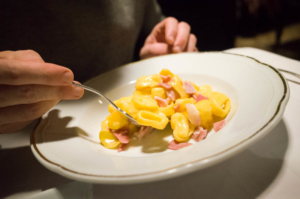
If you’re feeling adventurous, try the Torta di Tagliatelle: actual nests of egg pasta baked into a sweet, almond-scented base. It sounds like a culinary accident, but it’s a stroke of genius that tastes like pure nostalgia.
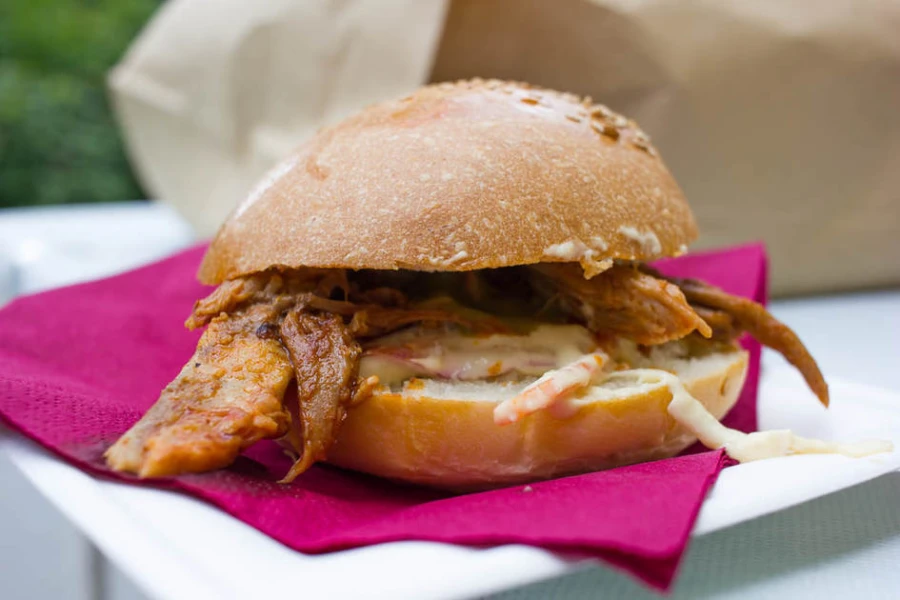
A hamburger from Forno Calzolari during their Mangirò food festival
If Atti is history, Forno Calzolari is the rugged soul of the territory.
Matteo Calzolari and his team brought the grit of the Apennine mountains down to the city center.
You won't find the typical white "Spider Bread" (Crocetta) here; instead, they are the masters of Ancient Grains, rye, and spelt. Their loaves are dark, honest, and have a deep, earthy aroma that stays with you.
This is also my favorite stop for "edible souvenirs" to pack in your suitcase.
Their biscuits with chocolate or the ones seasoned with Cervia sea salt are a dangerous temptation; they rarely make it all the way to the airport.
Every summer, they also organize the Mangirò, a legendary food walk through the wheat fields of Monteveglio. If you’re lucky enough to be in town when it happens, it’s the most authentic connection between the land and the plate you can find.
You can also find Forno Calzolari on Saturday morning at Mercato Ritrovato farmers market.
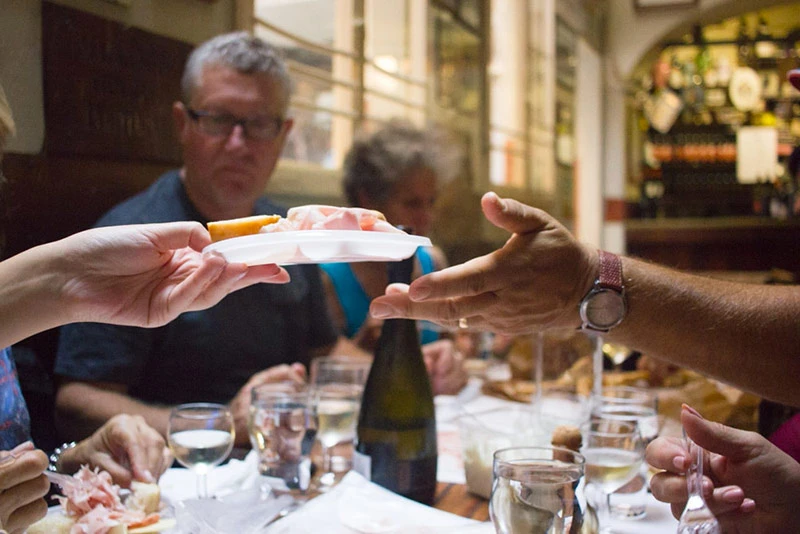
In the last decade, a new generation of bakers has turned the Bolognese "bread-scape" upside down, focusing on wild fermentation and high-quality storytelling.
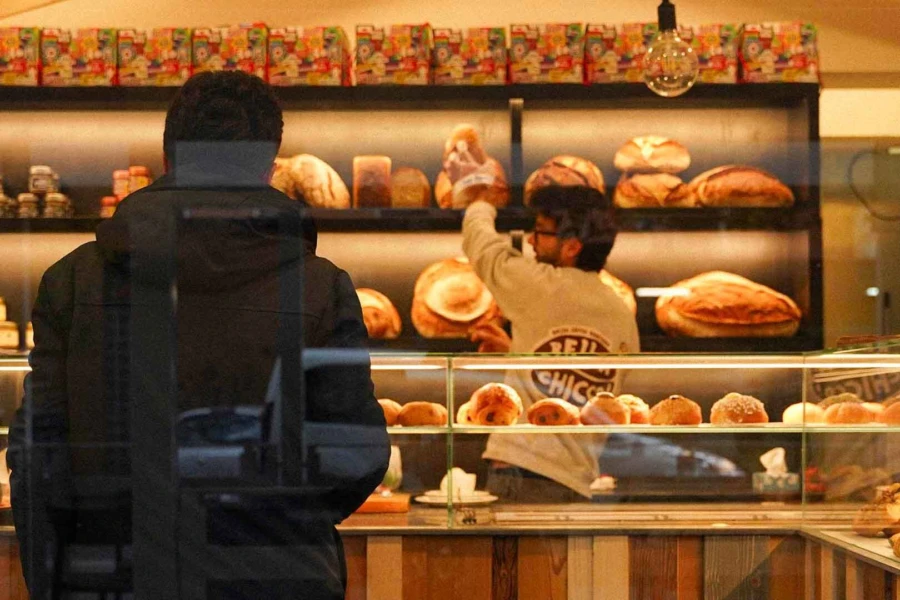
Inside Forno Brisa
In 2016, a group of "bread nerds" with tattoos and big dreams opened Forno Brisa, and the city was never the same.
They are the rockstars of the scene, and they’ve grown fast: you can now find their iconic shops all over town.
If you’re heading out of the city, their spots in Bolognina and Via Galliera are just a short walk from the central train station, making them the perfect "final salute" to Bologna. Grab a bag of coffee beans or a thick slice of pizza for the ride.
And for the football fans?
They even have a location right next to the Stadio Renato Dall'Ara, the only way to celebrate (or commiserate) after a Bologna FC match.
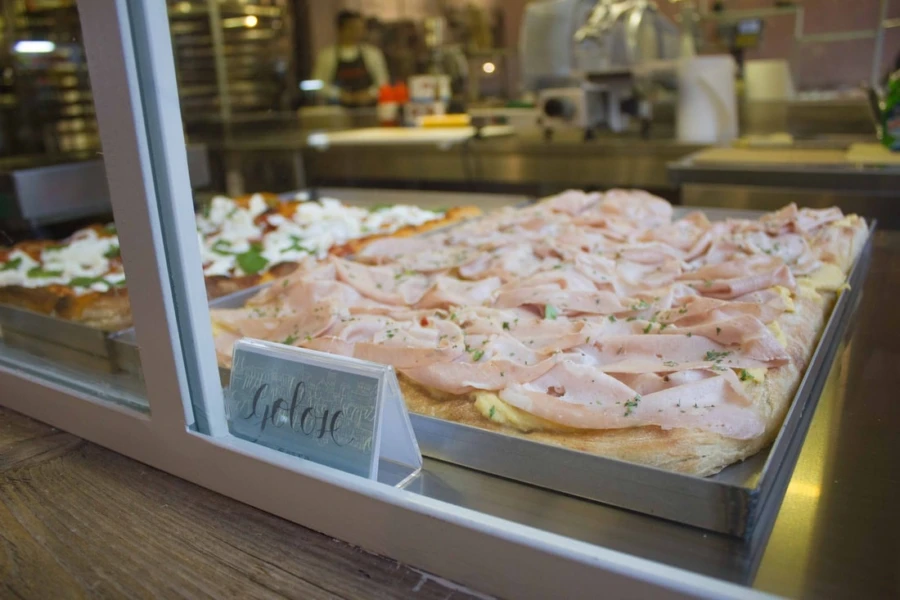
Just a few steps from the majestic San Francesco church, O Fiore Mio - Pizze di Strada is where pastry precision meets the pizza oven.
It all started in Faenza, under the expert hands of pastry chef Davide Fiorentini, who decided to apply his "sweet" science to savory doughs. We’ve been bringing our tour guests here since the day they opened, and honestly, it’s one of my favorite "offices."
If you see me sitting at one of their tables, I’m likely deep into a Smashing Pumpkins pizza, a seasonal masterpiece of pumpkin, gorgonzola, and crispy pancetta that I dream about all year long.
It’s refined, gourmet, and exactly what you need when you want a break from the traditional trattoria scene.
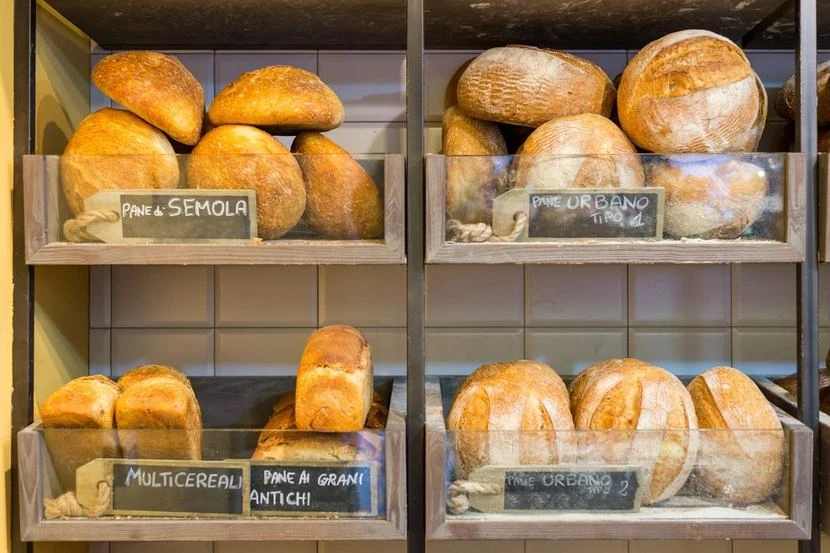
Bread from Molino Urbano
Located in the Saragozza neighborhood, close to the stadium, this is where I buy my daily bread.
It’s a true "neighborhood hero" focused on sourdough and long fermentations. Their bread is honest, sturdy, and stays fresh for a whole week.
It’s the place to see where the locals shop away from the city center crowds. Their focaccia and hemp-flour bread are absolute game-changers for your daily toast.
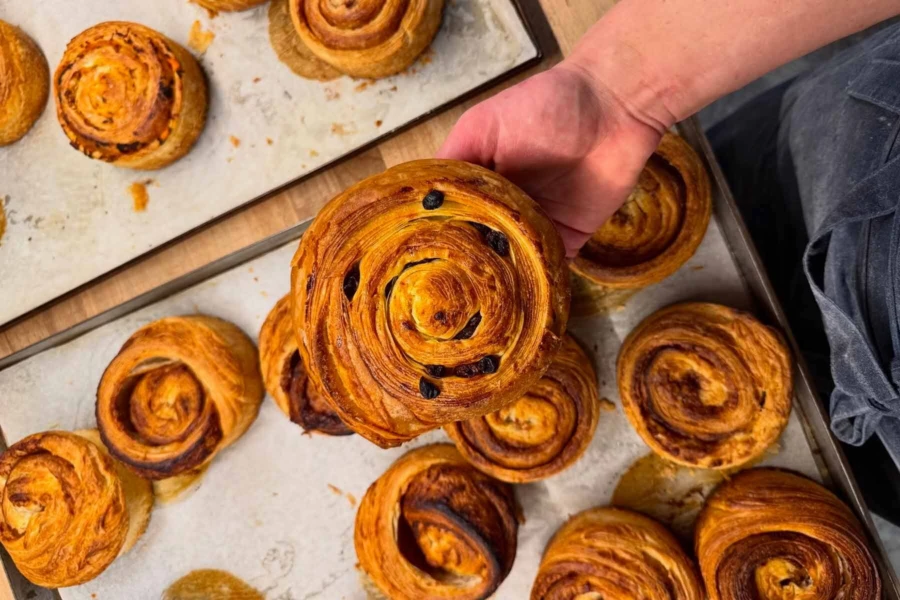
Croissants from Madrè in Castel San Pietro
You won’t see a sign for Madrè in the city center alleys, yet you’ll find their mastery on the tables of Bologna's most respected restaurants.
This laboratory is based in Castel San Pietro Terme, about 30 minutes outside the city. It’s the perfect strategic stop if you’re planning a day trip to see the painted walls of Dozza or the world-class ceramics in Faenza.
If you aren't leaving the city, don't worry—you can experience their bread exactly where I do: at Trattoria da Me. It is the loaf I choose for the perfect scarpetta with a rich ragù.
But if you spot their products in a local shop, look for more than just the bread.
Grab a bag of their Raviole di Marmellata. In Bologna, raviole are sturdy, crescent-shaped breakfast cookies filled with dark plum jam.
Their Cantucci are equally legendary: crunchy almond biscuits that travel perfectly, making them the best edible memory to pack for the flight home.
Being a celiac in the "Capital of Pasta" can feel daunting, but Bologna is surprisingly inclusive.
If you are traveling with allergies, you don't have to miss out on the city’s flour-dusted soul.
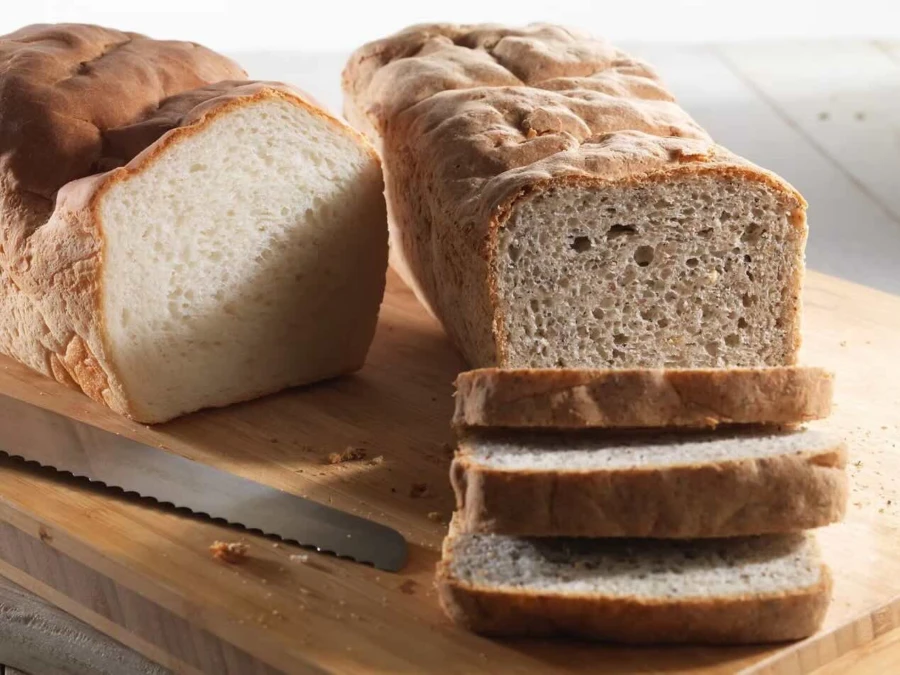
Located near Porta San Mamolo, La Spiga Amica is a gluten-free sanctuary.
This is a 100% gluten-free bakery that doesn’t compromise on flavor or texture.
They’ve truly managed to crack the code for the "holy trinity" of Bolognese pasta: you can find incredible tortellini, tagliatelle, and tortelloni here, all handmade and wheat-free.
Whether you want to buy fresh pasta to cook at your apartment or just grab some artisanal bread and pizza that actually tastes authentic, this is the place. It’s proof that in Bologna, "inclusive" also means "delicious."
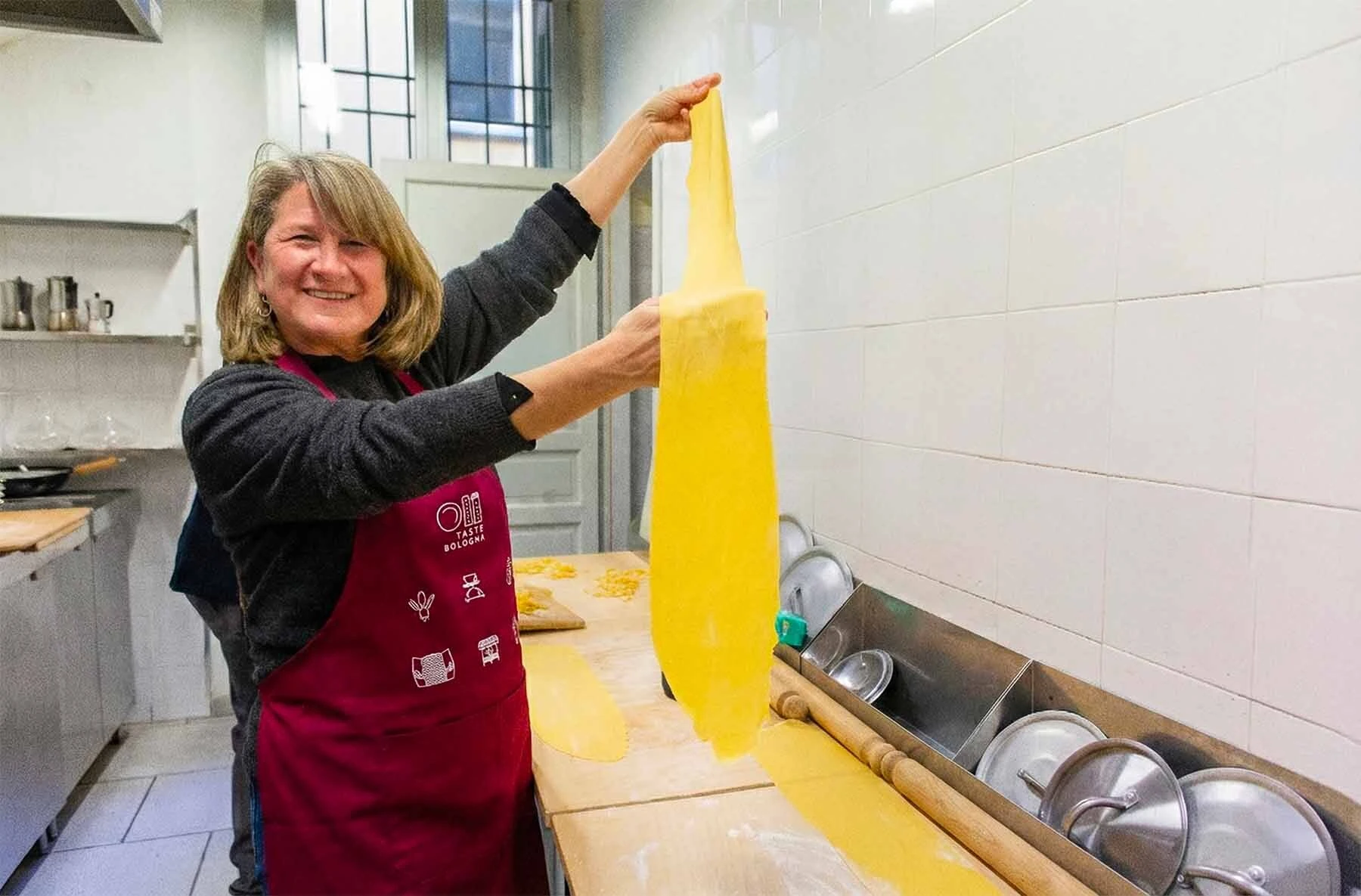
Pro Tip: if you want to do more than just buy it, you can learn to make it. We realized how hard it was for celiac travelers to find authentic experiences, so we launched our own Private Gluten-Free Cooking Class right here in Bologna. We’ll teach you the secrets of rolling the perfect dough without the gluten, so you can bring the taste of Italy back to your own kitchen.
To make sure your bakery crawl is a success, here are the final tools you need to navigate our streets like a local expert.
Navigating a Bolognese bakery counter can be overwhelming if you don't know the language of our ovens. To avoid the "tourist stare," look for these four icons that define a local childhood:
- Crescenta: this is our salty soul. It’s a rich, golden focaccia studded with cubes of prosciutto or mortadella. It’s best enjoyed mid-morning when it’s still slightly warm from the lard.
- Torta di Riso: the ultimate comfort food. This creamy, almond-scented custard cake is dense, moist, and perfectly portable for a snack while walking under the porticos.
- Crocetta: if you see a bread shaped like a hard-crusted spider or a little cross, buy it. It is our signature historical shape—crunchy, airy, and meant to be broken by hand to scoop up every last drop of ragù on your plate.
- Raviole: don't let the name confuse you—these aren't pasta! In our bakeries, raviole are sturdy, crescent-shaped cookies filled with dark, zesty plum jam (mostarda). They are the perfect "train-ride" snack for your next trip.
Whether you are looking for a quick pizza near the station at Forno Brisa, a gourmet "Smashing Pumpkins" slice at O Fiore Mio, or the traditional mountain grains of Calzolari, I’ve mapped out all my personal favorites for you.
Use this interactive guide to find the nearest oven and plan your own bread crawl through the red streets of Bologna.
Related post

Tasty newsletter
Stay in touch with monthly news and get my PDF guide with the best restaurants in Bologna and beyond